The Problem
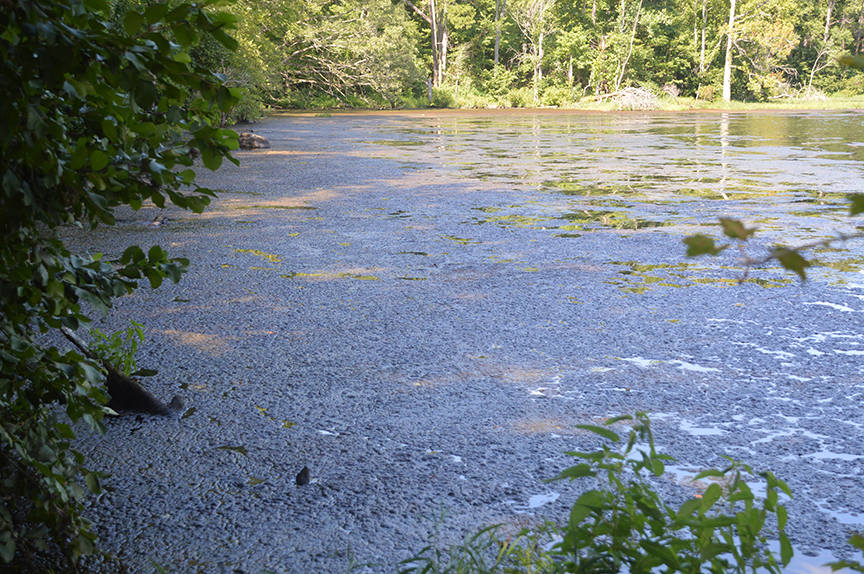
Lyngbya (Lyngbya wollei), also called black algae, forms dense mats on the bottom and top of water bodies. Live Lyngbya may appear dark blue, green, or black. Lyngbya is a naturally occurring species that has been reported in the United States for many years, and there has been an increase in blooms across the southern United States over the last several decades.
Badin Lake and surrounding lakes have been damaged by human and environmental factors that contributed to excess nutrient flows, like nitrogen, from upstream runoff of animal and crop farms. Lyngbya thrives along shorelines and coves where there is shallow and slow-moving water.
Left untreated, the toxic Lyngbya mats will affect the quality of the water, reduce recreational activities, smell, and impact the ecosystem of plants, fish and wildlife and destroy the natural beauty of our lake.